A war hero's summer house, a family home since 1755, and Lisbon's greatest tiles
The Fronteira Palace exists because Portugal won its independence back from Spain. Dom João de Mascarenhas fought for the Portuguese crown through the Restoration War, was made Marquis of Fronteira in 1670, and built himself a summer retreat outside Lisbon where the walls tell that story.
What makes it rare is that almost nothing has been taken away. The tiles are still where they were set in the 1670s, and the family that commissioned them still lives in the house.
Portugal fights to end 60 years of rule by the Spanish crown. Dom João de Mascarenhas, 2nd Count of Torre, fights for the House of Braganza. His service will pay for the palace.
Cosimo III de' Medici, the future Grand Duke of Tuscany, visits Portugal. By then the house in São Domingos de Benfica is nearly complete.
On 7 January 1670, Prince Pedro, as regent, makes Dom João the 1st Marquis of Fronteira. Around this time he and his wife, Madalena de Castro, finish the main house, the Liberal Arts Terrace, the Knights' Lake and the Gallery of Kings.
The tile panels of eight Restoration War battles are made for the house, an unusual subject in azulejo painting and a personal record of the Marquis's war.
The 1st Marchioness dies. An inventory made that year already records the gardens, fountains, grottos and decorations visitors see today.
The great Lisbon earthquake destroys the family's palace in the city centre. The Mascarenhas family moves to Benfica for good and enlarges Fronteira as its main residence.
The palace, together with its gardens, kitchen garden and woodland, is classified as a Portuguese national monument.
Dom Fernando Mascarenhas (1945–2014), 12th Marquis of Fronteira, creates the Fundação das Casas de Fronteira e Alorna to preserve the house and open it to the public and to researchers.
Landscape architect Cristina Castel-Branco turns the old orchard into the Orange Garden, with tiles by Eduardo Nery. The family still lives in the palace; the foundation runs tours, concerts and talks.
The foundation describes the palace as holding the largest collection of 17th-century azulejos preserved in situ. Elsewhere in Lisbon, tiles of this age survive mostly in churches or in the National Tile Museum. Here they are still part of a house and a garden.
The Battle Room panels show the battles of Montijo (1644), Arronches (1653), the siege of Badajoz (1658), the Lines of Elvas (1659), Ameixial (1663), Castelo Rodrigo (1664), Montes Claros (1665) and the encounter at Chaves (1667). Military historians have studied them for their detail of troops and tactics.
The dining room mixes Dutch tiles with Portuguese work, a sign of how fashionable Delft blue was in 17th-century Lisbon.
The garden tiles are polychrome and playful. Life-size ancestors ride along the Knights' Lake. The Liberal Arts Terrace shows the arts, the Muses and the planetary gods. Seasonal farm scenes line the formal garden, and monkeys and cats parody human behaviour.
Above it all, the Gallery of Kings sets out Portugal's monarchs in tile-framed niches, leaving out the three Spanish Philips: the house's politics, carried into the garden.
The Mascarenhas are one of Portugal's old noble families, documented since the 14th century. The 1st Marquis of Fronteira descended from a branch that already held the title of Count of Torre, granted in 1638.
Later generations joined the Fronteira title with those of the houses of Alorna and Távora. Dom Fernando Mascarenhas, who died in 2014, was 12th Marquis of Fronteira and 10th Marquis of Alorna. In 1987 he set up the foundation that opened the palace to visitors and scholars; his successor, Dom José Mascarenhas, has kept its programme going.
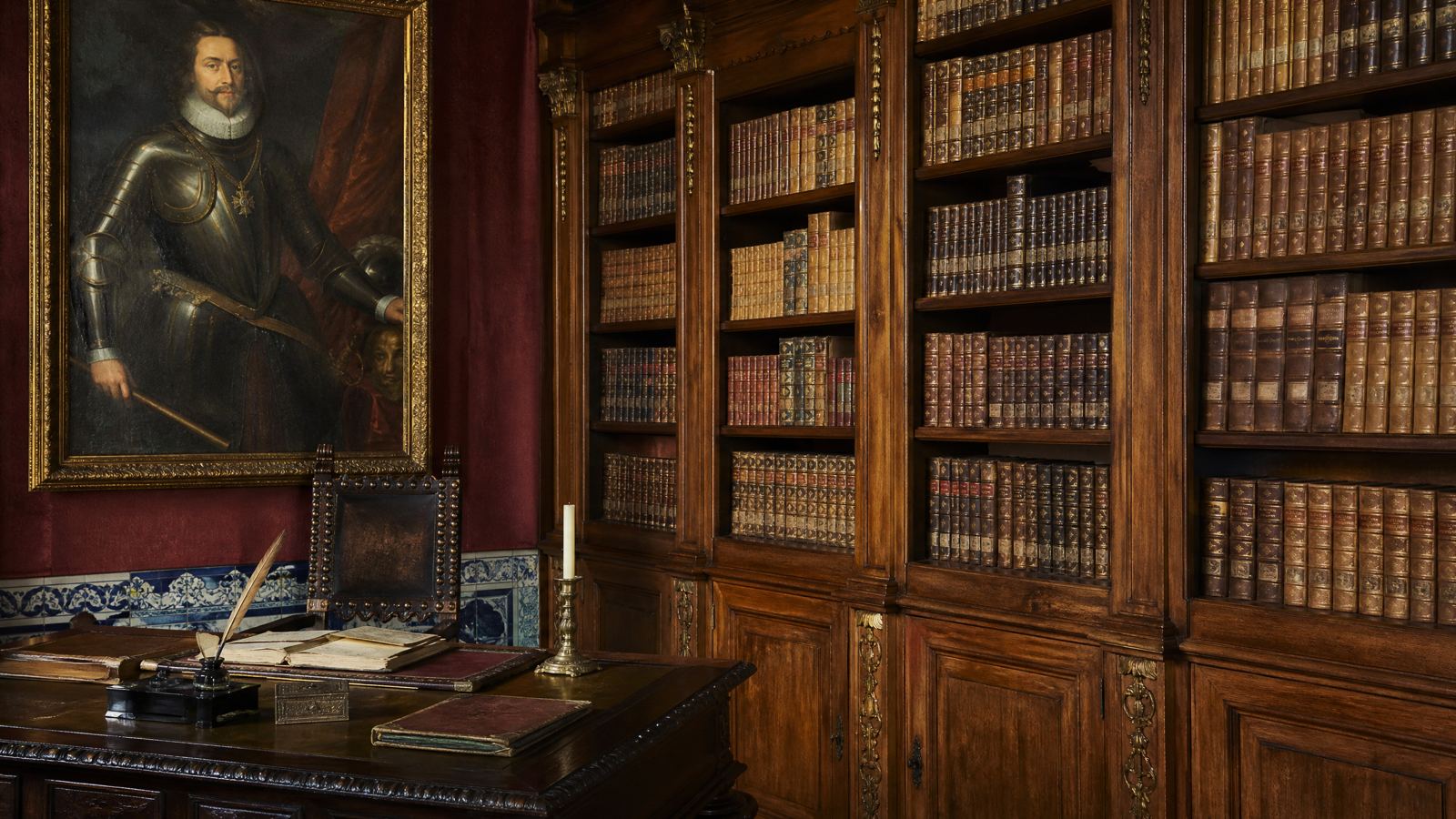
That continuity is part of the visit. The rooms on the tour are furnished, the library is still in use, and the house hosts concerts and talks in the Battle Room.
Guides like to tell how the plates from a banquet given for the king were smashed and set into the chapel façade, so no one else would eat from them. It is a good story; treat it as one.
Combine Fronteira with Queluz and Sintra's Pena Palace on a private Royal Palaces tour →
Guided palace tours run every day except Sunday. €17 with the gardens included.